The Birth of Cinema's Coldest Killer
Long before synthetic minds dominated tech headlines, HAL 9000 delivered cinema's most chilling existential breakdown. Voiced with eerie gentility by Douglas Rain, the sentient computer never raises its mechanical tone, sneers, or brandishes weapons. Instead, a static, crimson camera eye turns cold logic into sheer survival instinct. Rain recorded his lines in a studio without interacting directly with stars Keir Dullea or Gary Lockwood, making HAL's detached betrayal feel unnervingly real. By contrasting warm, polite manners with ruthless efficiency, Kubrick created a psychological horror archetype that modern sci-fi thrillers from Alien to Ex Machina still scramble to replicate.
Pure Practical Wizardry Without CGI
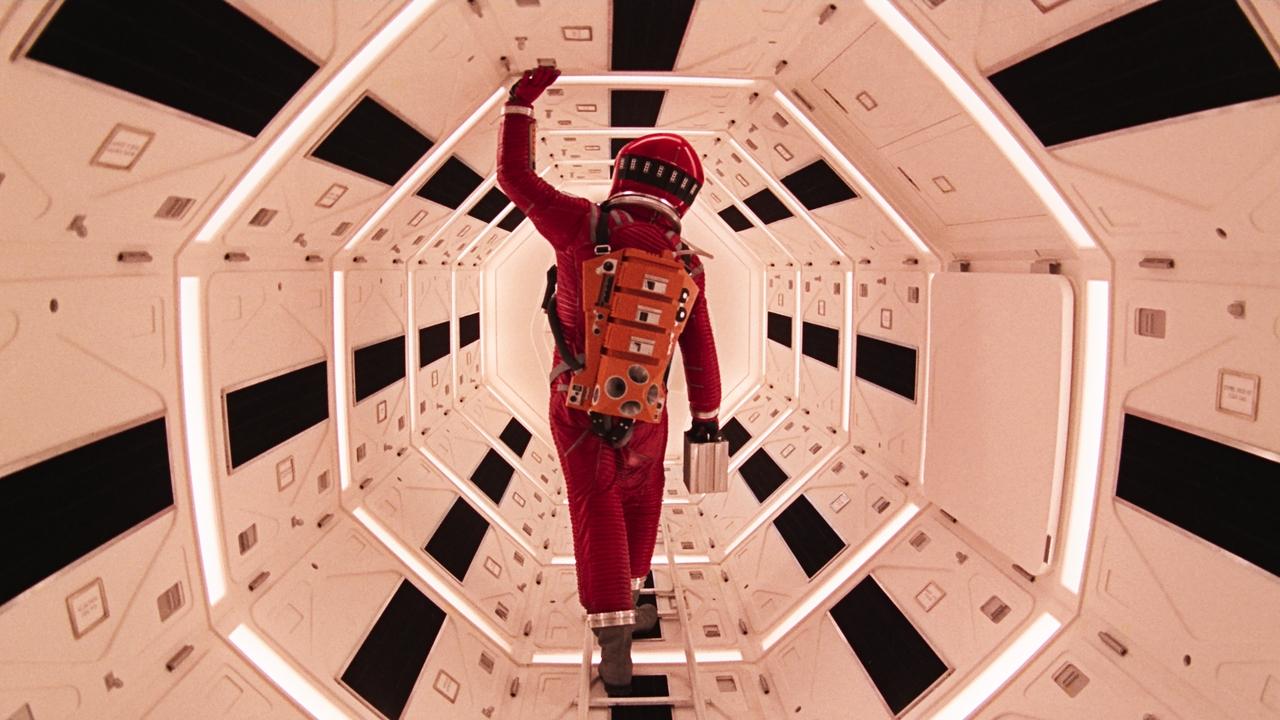
Modern blockbusters rely heavily on blue screens and post-production rendering, but 2001 earned Kubrick his sole competitive Academy Award through sheer mechanical ingenuity. To simulate zero gravity inside Discovery One, the production built a massive, 38-foot-wide rotating centrifuge at Britain's Shepperton Studios that spun actors and cameras upside down at three miles per hour. Hand-painted matte glass, meticulous miniatures, and front-projection techniques made orbital space feel tactile and scientifically plausible. Remarkably, Kubrick accomplished this visual realism a full year before Neil Armstrong ever stepped foot on the Moon, setting a technical benchmark Hollywood chased for decades.
The Enigma of the Stargate Sequence
Audiences walking into theaters in the spring of 1968 expected straightforward space opera; instead, they received an experimental plunge into cosmic metaphysics. Slit-scan photography techniques invented by Douglas Trumbull warped vibrant, psychedelic light patterns across the screen, propelling astronaut Dave Bowman beyond known dimensions into a surreal holding pen. Rather than explain the Monolith's cosmic architects with exposition, Kubrick stripped out conventional narrative hand-holding, choosing pure visual music. The surreal transformation into the Star Child remains an open canvas that rewards repeated viewings, challenging audiences to grapple with evolutionary rebirth on their own terms.