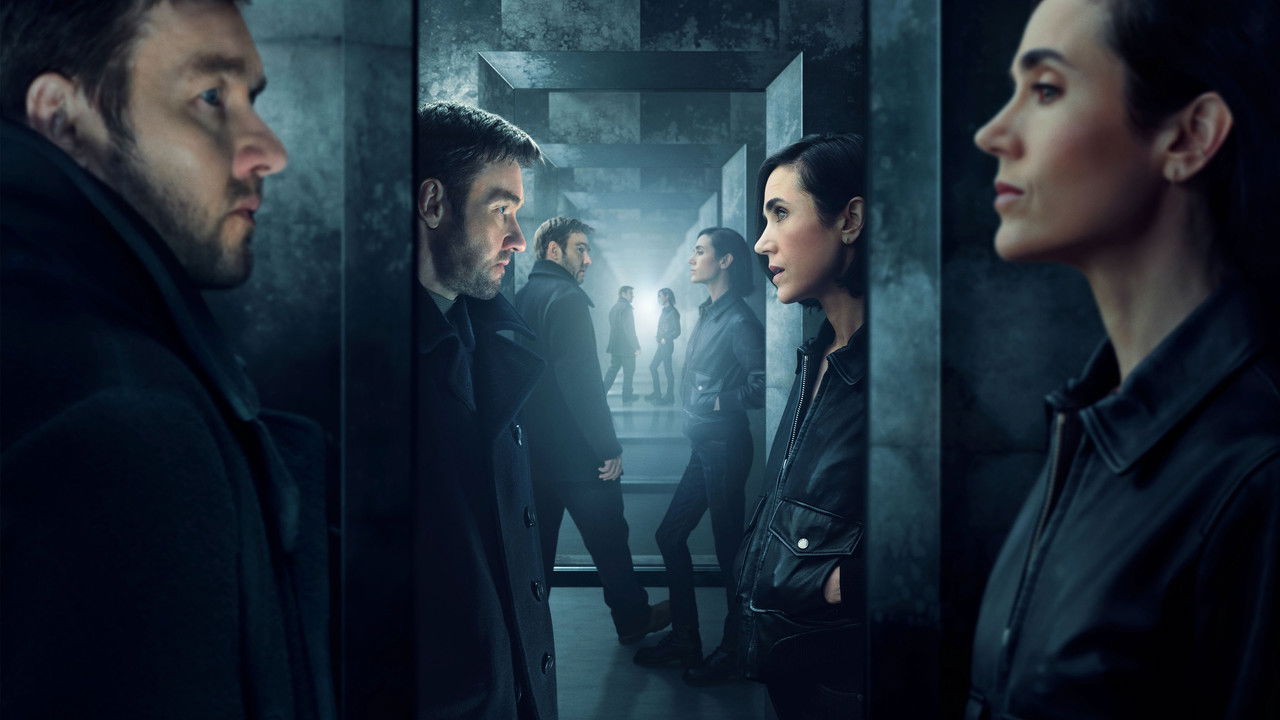
A Collision of Infinite Realities
Jason Dessen, an underachieving college physics professor living quietly in Chicago with his wife Daniela and teenage son Charlie, finds his ordinary existence shattered in an instant. Abducted by a masked stranger, Jason awakens strapped to a gurney inside an unfamiliar laboratory surrounded by cheering scientists. He soon discovers his abductor is actually Jason2—an alternate version of himself who traded domestic bliss for breakthrough quantum research. Having invented a mysterious Box capable of traversing the multiverse, this ruthless double stole Jason's family to live out a stolen fantasy, leaving the original Jason stranded across endless, hostile realities fighting desperately to find his way back home.
Ending Explained: The Multi-Jason Nightmare
The climactic episodes reveal the existential nightmare at the core of quantum probability: every choice Jason made while traveling the Box spawned another version of him with the exact same goal. Dozens of desperate Jasons flood Chicago, each convinced he is the rightful husband and father. Instead of a tidy confrontation between Jason1 and Jason2, the finale becomes a harrowing moral puzzle. Realizing their presence endangers Daniela and Charlie, the surviving original family makes the agonizing choice to abandon their home universe entirely. Hand in hand, they step into the Box to choose an unknown, unwritten future together, leaving behind an army of fractured doubles.
Subtle Dualities and Creative Control
Joel Edgerton anchors the series with a demanding dual performance, calibrating subtle posture shifts, vocal inflections, and emotional weariness to differentiate each parallel variant without relying on cartoonish gimmicks. Academy Award winner Jennifer Connelly brings heartbreaking groundedness to Daniela, capturing the gut-wrenching grief of realizing her partner has been replaced by a psychological impostor. Alice Braga adds crucial warmth as psychiatrist Amanda, offering empathy amidst quantum madness. Behind the camera, author Blake Crouch served as showrunner and head writer, ensuring the intricate mechanics of superposition and the box's liminal corridor stayed authentic to his original hard-sci-fi vision.
Binge-Worthy Thrills with Emotional Weight
Carrying a mature TV-MA rating for violence, intense psychological peril, and occasional strong language, Dark Matter avoids typical streaming bloat by treating high-concept science fiction as an intimate marriage drama. While the middle episodes flirt with familiar dystopian tropes as Jason hops through apocalyptic realities, the tension ratchets relentlessly toward a truly haunting conclusion. Its 7.8 rating reflects strong viewer loyalty drawn to its brisk pacing and grounded stakes. For subscribers seeking a cerebral thriller that values human consequences over empty spectacle, this nine-episode run stands out as one of the year's sharpest genre offerings.