The Crucible: From London Exile to Resistance
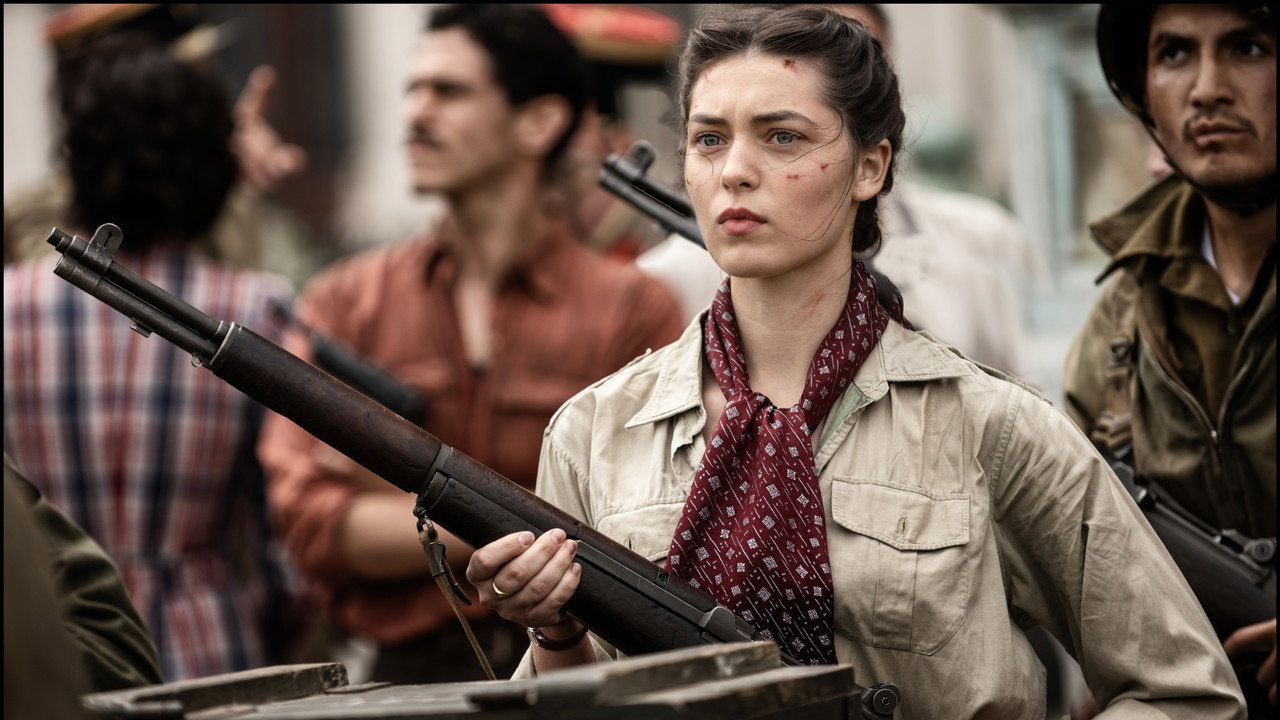
Antonin Baudry's historical drama picks up in June 1940, capturing Charles de Gaulle at his lowest ebb. Stripped of his homeland and condemned by the puppet Vichy regime, the stubborn general must construct a shadow government with virtually no tangible military assets. Across five grueling wartime years, the narrative exposes the friction inside the Free French movement as clandestine radio broadcasts ignite an underground revolt across occupied France. Rather than relying purely on frontline warfare, the film operates like an espionage thriller, framing diplomacy as a vicious battlefield where de Gaulle fights rival generals, hostile foreign allies, and internal dissenters to ensure France maintains sovereign dignity.
Ending Explained: The March Down the Champs-Élysées
The climactic act culminates with the August 1944 liberation of Paris, yet Baudry avoids standard triumphalism. Instead of a straightforward victory lap, the final sequence details the perilous standoff between de Gaulle, rival communist resistance factions, and Allied commanders seeking military governorship over France. Walking under sniper fire toward Notre-Dame, de Gaulle cements his status not as an Allied subordinate, but as the undeniable leader of a sovereign nation. The closing moments highlight the tragic human toll of liberation, concluding in 1945 as de Gaulle prepares to tackle the chaotic emergence of the Fourth Republic, perfectly framing his legendary transition from insurgent soldier to foundational statesman.
Fierce Ensembles and Meticulous Period Scale
Carrying the weight of history on his shoulders, Simon Abkarian delivers an imposing, unyielding performance as de Gaulle, capturing the general's legendary obstinacy and hidden vulnerabilities. Niels Schneider and Karim Leklou shine as underground resistance organizers risking execution on the streets of occupied France, while Thierry Lhermitte brings seasoned gravity to the old guard of French politics. British veteran Simon Russell Beale steals his scenes as an exasperated Winston Churchill, sparking venomous yet respectful diplomatic showdowns behind closed Whitehall doors. Shot on location with practical sets, the nearly three-hour production trades CGI bombast for authentic tension, prioritizing atmospheric period realism over polished myth.
Review & Watch Guide: A Must-See Historical Feat
Holding an impressive 7.8 rating from early audiences, this epic justifies its expansive runtime by refusing to sanitize the messiness of wartime leadership. Expected to carry a mature rating due to authentic wartime violence and raw psychological tension, the film demands full attention on the biggest screen possible. It avoids cheap sentimentality, treating historical figures as deeply flawed operators making brutal calculations under impossible stakes. For anyone fascinated by mid-century history or classic political intrigue, the theatrical experience offers an immersive achievement in tension, pacing, and sheer narrative scale that honors the gravity of real events.